Acyclovir — Trusted, Clinically Proven Antiviral for HSV & Shingles
Acyclovir is a well‑established antiviral therapy used worldwide for managing herpes simplex and varicella‑zoster infections. Its strong evidence base, long‑term safety profile, and broad clinical adoption make it a key treatment option in antiviral care.
Table of Contents
►Overview
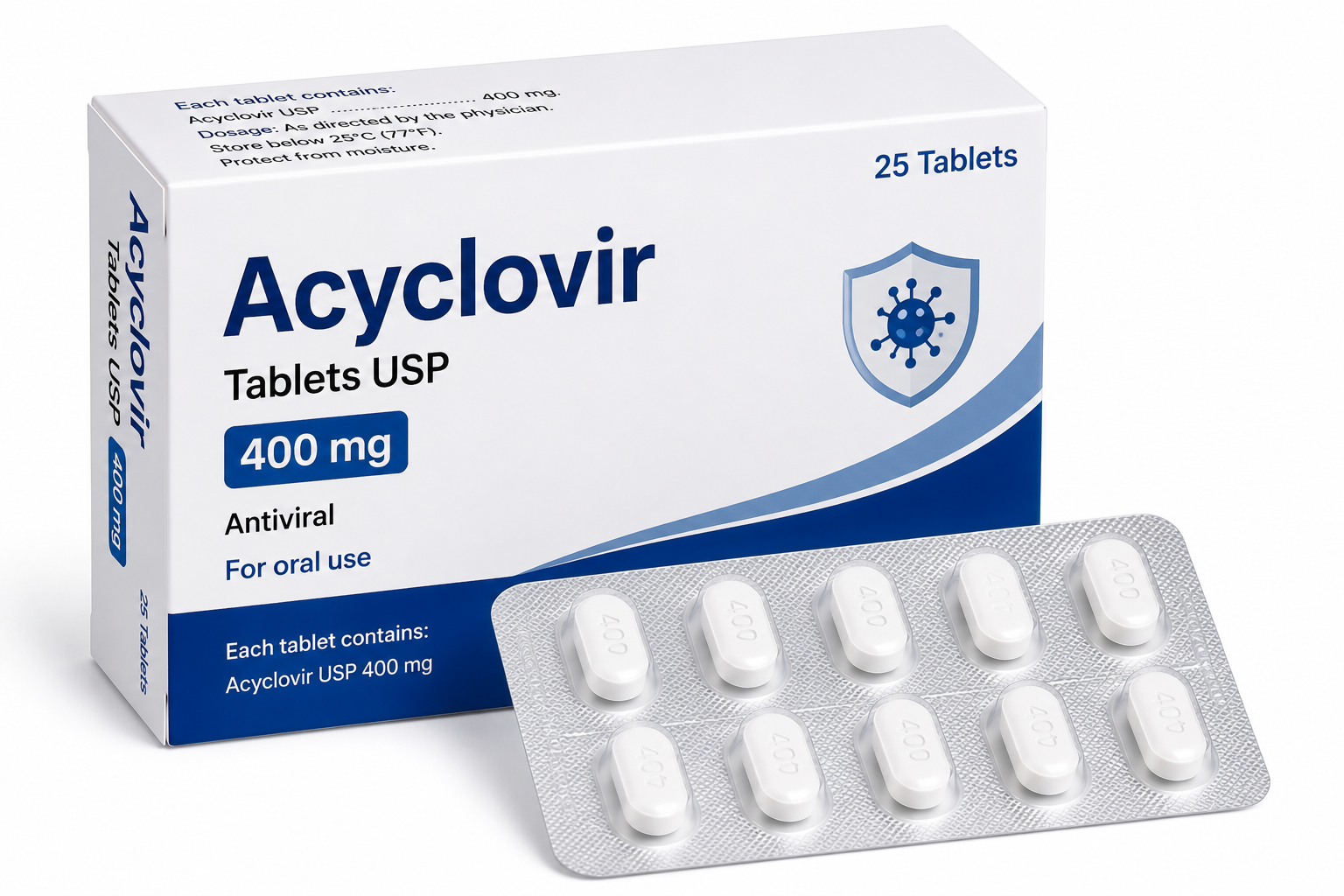
Acyclovir is a widely used antiviral medication designed to inhibit the replication of herpesviruses, including HSV‑1, HSV‑2, and varicella‑zoster virus. Its long‑established clinical profile, predictable pharmacokinetics, and strong safety record make it a foundational therapy in the management of herpes infections. Acyclovir is available in oral, topical, and intravenous formulations, allowing flexible use across mild, moderate, and severe clinical presentations.
Due to its targeted mechanism of action, Acyclovir remains one of the most trusted antiviral agents worldwide, frequently recommended for both episodic treatment and long‑term suppressive therapy. Its affordability and broad availability further reinforce its role as a first‑line antiviral option.
Medical Uses
Acyclovir is widely used in clinical practice for managing infections caused by herpesviruses. It is considered a foundational antiviral therapy due to its predictable pharmacological behavior, extensive safety data, and strong evidence base. Acyclovir is commonly utilized for episodic treatment, outbreak suppression, and reducing viral shedding in recurrent infections.
- HSV‑1 (oral herpes): reduces outbreak duration and symptom severity.
- HSV‑2 (genital herpes): used for initial, recurrent, and suppressive therapy.
- Varicella‑zoster virus: indicated for shingles and chickenpox management.
- Immunocompromised patients: often used under medical supervision for prophylaxis.
Dosage & Administration
Acyclovir dosing varies depending on the infection type, severity, and clinical goals. Oral formulations are commonly used for mild to moderate infections, while intravenous administration may be considered in hospital settings for severe or disseminated disease. The table below outlines typical dosing patterns referenced in clinical guidelines.
| Indication | Typical Adult Dose | Frequency | Duration |
|---|---|---|---|
| Cold sores (HSV‑1) | 400 mg | 3× daily | 5 days |
| Genital herpes — initial episode | 400 mg | 3× daily | 7–10 days |
| Genital herpes — recurrent | 400 mg | 3× daily | 5 days |
| Suppressive therapy | 400 mg | 2× daily | Long‑term |
| Shingles (herpes zoster) | 800 mg | 5× daily | 7–10 days |
How Acyclovir Works
Acyclovir is a nucleoside analogue that selectively targets viral DNA synthesis. After entering infected cells, it undergoes phosphorylation by viral thymidine kinase, enabling it to integrate into viral DNA chains. This incorporation disrupts replication and prevents the virus from producing new infectious particles. Because activation depends on viral enzymes, Acyclovir demonstrates high selectivity and a favorable safety profile.
How to Take Acyclovir
Acyclovir is typically taken at evenly spaced intervals to maintain consistent antiviral activity. Oral tablets may be taken with or without food, depending on individual comfort. Adequate hydration is often encouraged during therapy to support renal clearance. Treatment timing is especially important for herpes outbreaks, as early initiation is associated with better clinical outcomes.
Side Effects
Acyclovir is generally well tolerated, with most reported effects being mild and transient. Side effects may vary depending on dose, duration, and formulation. The following effects have been documented in clinical literature:
- Headache or mild fatigue
- Nausea or gastrointestinal discomfort
- Skin irritation (topical formulations)
- Occasional dizziness
- Rare renal effects at high doses or in dehydrated individuals
Contraindications
Acyclovir may not be appropriate in certain clinical situations. Contraindications described in medical references include:
- Known hypersensitivity to Acyclovir or related antivirals
- Severe renal impairment without appropriate dose adjustments
- History of adverse reactions to nucleoside analogues
Drug Interactions
Acyclovir may interact with medications that influence renal function or compete for renal tubular secretion. Interactions noted in pharmacological references include:
- Nephrotoxic agents, which may increase renal strain
- Probenecid, which may alter Acyclovir clearance
- Other antivirals with overlapping metabolic pathways
Warnings & Precautions
Clinical guidelines highlight several considerations when using Acyclovir. Adequate hydration is often emphasized to support renal elimination. Individuals with pre‑existing kidney conditions may require additional monitoring. Early initiation of therapy is frequently associated with improved outcomes in herpes infections. As with any antiviral, treatment decisions should be guided by qualified healthcare professionals.
Acyclovir vs Other Antivirals
Several antiviral agents are used for herpesvirus infections. Acyclovir remains a widely trusted option, while newer agents may offer alternative dosing schedules or pharmacokinetic advantages. The comparison tiles below highlight key distinctions relevant to clinical decision‑making and patient convenience.
Acyclovir
Proven antiviral with decades of clinical use. Cost‑effective, widely available, and suitable for episodic and suppressive therapy.
- Multiple daily doses
- Strong safety profile
- Broad clinical experience
Valacyclovir
A prodrug of Acyclovir with improved bioavailability. Often preferred for its simplified dosing schedule and strong clinical outcomes.
- Less frequent dosing
- Higher absorption
- Comparable efficacy
Famciclovir
An alternative antiviral option with convenient dosing. Often selected based on availability, patient preference, or cost considerations.
- Convenient dosing
- Effective for HSV & VZV
- Alternative to Acyclovir
Storage
Acyclovir should be stored at controlled room temperature in a dry environment away from direct heat and moisture. Tablets and capsules are typically kept in their original packaging to protect them from humidity. Topical formulations should be tightly closed after each use. As with all medications, storage recommendations may vary by manufacturer.
Secure Access to Trusted Acyclovir Options Today
Review available Acyclovir formulations and compare indicative pricing to better understand antiviral options commonly used in clinical practice. Consistent and timely antiviral management plays a key role in reducing outbreak intensity and supporting long‑term control strategies.